
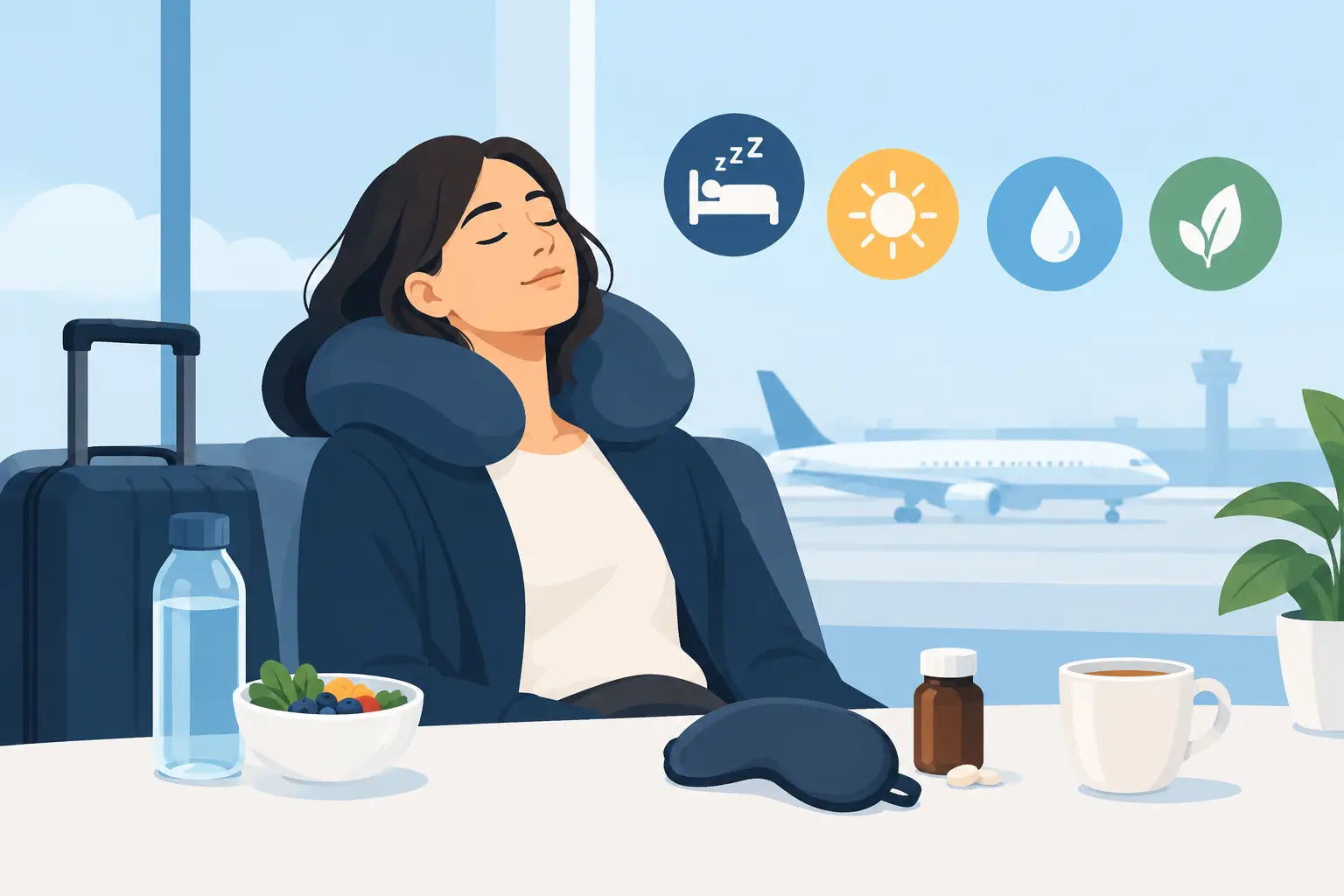
You step out of the airport into Turks and Caicos sunshine, yet your body still feels as though it is somewhere over the Atlantic. Heavy eyes, a restless mind, dry skin, and tight shoulders can make the first day of a beautiful escape feel strangely out of reach. The best treatments for jet lag work by supporting your body’s adjustment gently, rather than asking you to push through the fatigue.
Jet lag is more than simple tiredness. Crossing time zones disrupts your circadian rhythm – the internal system that influences sleep, alertness, digestion, and body temperature. A long flight can add dehydration, prolonged sitting, alcohol, airport meals, and the tension of travel to the mix. The most restorative approach combines smart timing with unhurried care: daylight, water, nourishing food, sleep, and hands-on therapies that help you settle into your destination.
Why Jet Lag Feels Different on Vacation
Jet lag is often most noticeable when your surroundings invite you to be fully present. You may have planned a beach lunch, a sunset dinner, or a day on the water, but feel alert at 3 a.m. and sleepy at the very moment you want to enjoy the ocean.
The direction of travel matters. Flying east generally makes adjustment harder because you are asking your body to fall asleep earlier than usual. Westward travel tends to be easier for many people, although the time change can still affect mood, appetite, and energy. Your usual sleep schedule, number of time zones crossed, age, stress level, and how well you slept before departure also shape the experience.
There is no instant cure, and that is worth saying plainly. A spa treatment will not reset your body clock in an hour. What it can do is ease the physical strain of travel, reduce the sense of being wound too tightly, and create the calm conditions that make restorative sleep more likely.
The Best Treatments for Jet Lag Start With Light and Sleep
Let daylight set the rhythm
Natural light is one of the strongest signals your body receives about what time it is. Once you arrive, spend time outdoors in daylight, ideally early in the day if you need to move your schedule earlier. In a place like Providenciales, this can be as simple as a gentle morning walk along the shore, breakfast on a villa terrace, or quiet time by the water before the heat of the afternoon.
Keep this exposure comfortable. If you are exhausted, do not turn your first afternoon into an ambitious excursion. A little daylight and gentle movement are more useful than draining yourself further. Protect your skin, seek shade when needed, and let the island pace guide you.
Choose a strategic nap, not an accidental one
A long nap can feel irresistible after a red-eye flight, but sleeping for several hours late in the day may prolong jet lag. If you truly need rest, aim for a brief nap of around 20 to 30 minutes, preferably earlier in the afternoon. Set an alarm, cool the room, and allow yourself a pause without disappearing into a second night of sleep.
Then try to stay awake until a reasonable local bedtime. You do not need to be perfect about it. The goal is simply to give your body a clear new pattern: daylight is for activity, nighttime is for rest.
Make the first night a sleep ritual
Your first evening should feel quieter than your travel day. Eat a light, satisfying dinner, dim bright screens, and avoid treating bedtime as a negotiation. A warm shower or bath, a few minutes of slow breathing, and a cool, dark room can make a meaningful difference.
If you are considering melatonin, sleep medication, or supplements, speak with a qualified medical professional first, especially if you are pregnant, managing a health condition, or taking prescription medication. These options can be appropriate for some travelers, but timing and dosage matter.
Hydration and Food That Feel Good After Flying
Cabin air and travel routines can leave you surprisingly depleted. Begin rehydrating as soon as you land and continue steadily through the day. Water is usually the simplest choice. If you have been sweating in the sun or feel especially drained, an electrolyte drink may be helpful, particularly when chosen with attention to your health needs and sugar tolerance.
Avoid trying to fix travel fatigue with endless coffee. A morning coffee can be a pleasure, but caffeine late in the day can delay sleep just when your body needs consistency. Alcohol can also make you sleepy at first while fragmenting the sleep that follows, so consider saving the celebratory cocktail for a night when you already feel more settled.
Choose meals that are easy to digest and aligned with local time. Fresh fruit, vegetables, lean protein, whole grains, and nourishing soups or broths can feel more supportive than a very rich meal after a flight. Eat when the destination eats. That simple cue helps your body understand that you have arrived.
Massage Is a Restorative Treatment, Not a Shortcut
Hours in a narrow seat can leave the neck, lower back, hips, legs, and feet aching. For many travelers, a therapeutic massage is one of the most pleasurable ways to begin releasing that stored tension. Gentle to moderate pressure encourages the body to shift out of the braced, hurried feeling that travel creates.
An Abhyanga-inspired warm herbal-oil massage is especially fitting after a long journey. In Ayurvedic tradition, this slow, enveloping massage is used to soothe an overactive nervous system and bring a sense of groundedness back to the body. The warmth of the oil, rhythmic strokes, and attentive care can feel deeply comforting when you have spent a day moving through terminals, taxis, and unfamiliar time zones.
For some guests, a lighter lymphatic-style body treatment may feel best, particularly when puffiness and sluggishness are the main complaints. Others prefer focused work on the shoulders, calves, and feet. Share how you feel before your session: depleted, sore, headachy, swollen, or unable to relax. A skilled therapist can adjust the pressure and pace accordingly.
If you are severely dehydrated, have a fever, a new rash, unexplained swelling, a blood-clotting condition, or significant pain in one leg, postpone massage and seek medical guidance. A wellness ritual should always feel supportive, never like something to endure.
A Gentle Arrival-Day Reset
When your schedule allows, treat the first 24 hours as a transition rather than a race to make vacation memories. The following rhythm offers a realistic way to feel more like yourself without overplanning every hour:
- Spend at least a little time in natural daylight after arrival.
- Drink water consistently, then enjoy a balanced meal on local time.
- Move gently with a walk, light stretching, or a few easy yoga poses.
- Choose a restorative massage or body ritual, followed by an early, quiet evening.
This is not about being disciplined on holiday. It is about giving your nervous system the same care you would give your skin after sun exposure: thoughtful, patient, and replenishing.
Skin Care for the Post-Flight Look and Feel
Jet lag often shows up in the mirror. Dry cabin air, disrupted sleep, and changes in climate can make skin appear dull, congested, or puffy. Resist the urge to overcorrect with strong exfoliation or a complicated new routine on the first day.
Instead, focus on replenishment. Gentle cleansing, ample hydration, a soothing moisturizer, and sunscreen are the essentials. A calming facial can be a lovely addition once you have had water and rest, particularly one designed to comfort dehydrated or tired-looking skin. Ingredients and rituals inspired by turmeric, sandalwood, yogurt, or nourishing botanical oils can make the experience feel both indulgent and skin-supportive.
Keep expectations realistic: a facial can refresh the surface of the skin and provide a valuable moment of rest, but quality sleep remains the treatment that gives the complexion its most lasting brightness.
Give Yourself Permission to Arrive Slowly
A private-villa massage can be particularly appealing when the thought of getting dressed and going somewhere else feels like one task too many. At Ayur Spa, restorative treatments can be brought to your villa or beach setting, allowing the calm of your treatment to continue without a rushed trip back. For couples arriving together, a shared massage can also turn travel recovery into the first quiet memory of the vacation.
The luxury is not only in the warm oils, expert touch, or serene setting. It is in allowing yourself to pause before the itinerary begins. Give your body a little love, it deserves it.
Tonight, let the sunset be your cue to soften the pace. Drink another glass of water, put your phone down a little earlier, and let sleep arrive naturally. Paradise will still be waiting in the morning.