
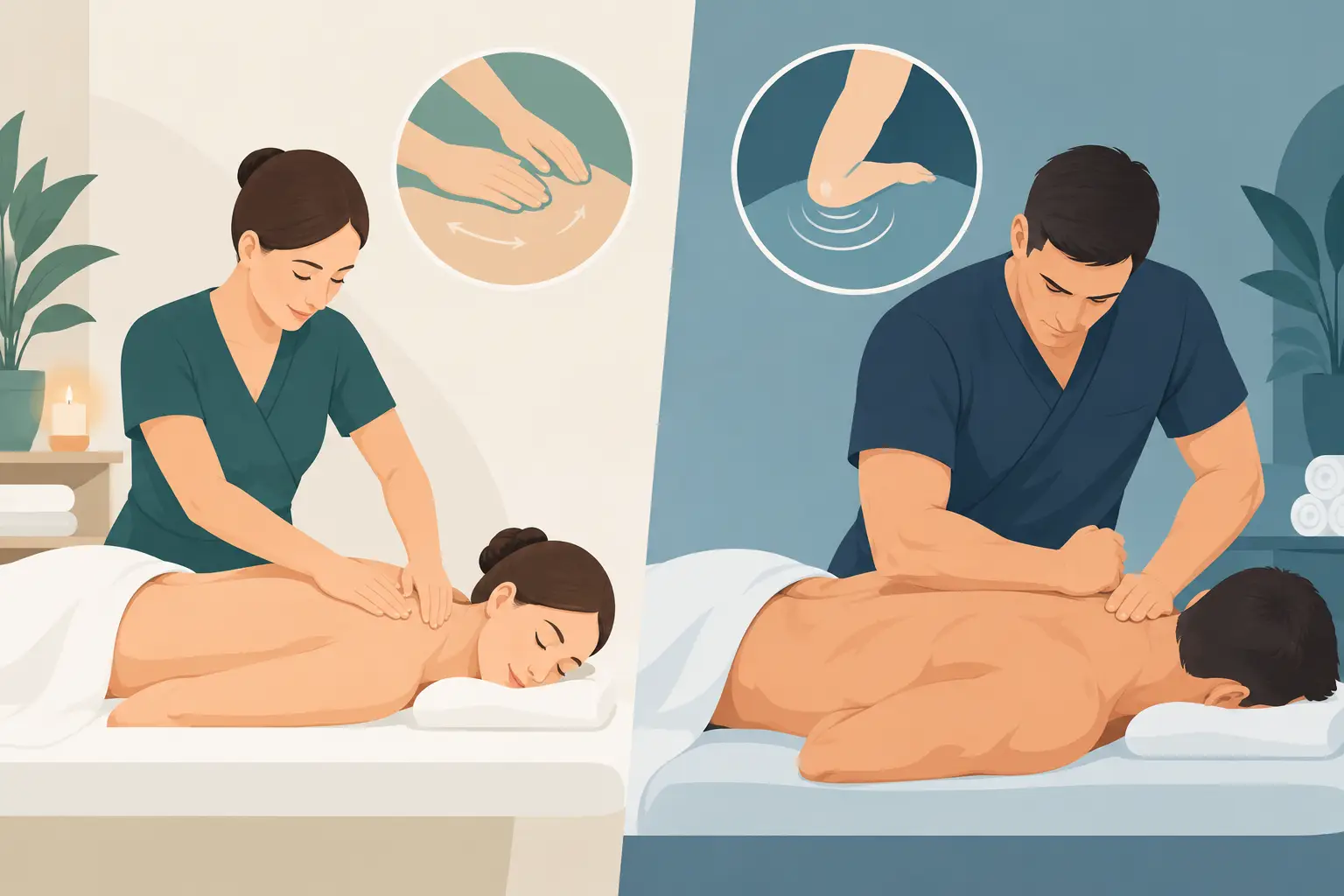
A massage should meet you where your body is, whether that means easing into vacation mode after a long flight or addressing the knot in your shoulder that has followed you for months. When choosing Swedish versus deep tissue massage, the real question is not which treatment is better. It is which kind of touch, pressure, and intention will leave you feeling most restored.
Both can be deeply relaxing. Both can support circulation, ease everyday muscle discomfort, and create the rare pleasure of being fully cared for. Yet the experience in the room, and the way your body may feel afterward, can be quite different.
Swedish Versus Deep Tissue Massage: The Essential Difference
Swedish massage is designed around relaxation and gentle renewal. Your therapist uses long, gliding strokes, soft kneading, rhythmic movements, and lighter-to-moderate pressure to calm the nervous system and encourage overall circulation. The feeling is often fluid and comforting, like your body is finally being given permission to let go.
Deep tissue massage is more targeted. It uses slower strokes and sustained, focused pressure to work into areas of chronic tightness and the connective tissue surrounding muscles. Rather than moving broadly across the whole body with a consistent rhythm, the therapist may spend more time on a particular area, such as the neck, upper back, hips, calves, or lower back.
Pressure alone does not define the difference. A skilled massage can be firm without being deep tissue, and deep tissue work should never mean enduring pain. The distinction lies in the treatment goal: Swedish massage prioritizes calming and full-body relaxation, while deep tissue massage focuses on stubborn patterns of tension and restricted movement.
When Swedish Massage Feels Right
Swedish massage is often the beautiful choice when your body feels tired, overstimulated, or simply ready to be nurtured. It suits the guest who has arrived in Turks and Caicos carrying the pace of a demanding schedule, the traveler feeling stiff after hours in transit, or the couple hoping to settle into a slower rhythm together.
The pressure is adaptable, but the treatment generally feels gentler and more flowing than deep tissue work. It may help soothe mild muscle fatigue, support a sense of lightness, and invite a deeper state of rest. Many guests notice that their breathing slows and their mind becomes quieter as the session unfolds.
A Swedish massage can be especially fitting when you want to enjoy the rest of your day with little recovery time. You may walk away feeling loose, rested, and ready for a sunset dinner, a quiet afternoon by the water, or an unhurried evening in your villa.
Choose Swedish Massage If You Want to Relax First
Consider Swedish massage if your primary goal is stress relief, restorative sleep, general body relaxation, or a gentle reset after travel. It is also a wise starting point if you are new to massage, sensitive to intense pressure, or uncertain about how your body will respond.
That does not make it a lesser treatment. Relaxation is not an indulgence without value. When the body shifts out of constant alertness, muscles often soften more willingly, breathing deepens, and the benefits can extend well beyond the massage table.
When Deep Tissue Massage May Serve You Better
Deep tissue massage is often requested by guests who can point directly to the problem: a persistent knot between the shoulder blades, tight hips after long days of sitting, calves that feel shortened after activity, or a back that never seems to release. It can be an excellent option for people who prefer focused therapeutic work and are comfortable with firmer pressure.
Your therapist may work gradually into the area, checking in as pressure increases. A productive deep tissue session can feel intense at moments, but it should remain within your tolerance. Sharp pain, holding your breath, bracing your muscles, or feeling that you must “push through” are signs to speak up. More pressure is not automatically more effective.
Because the work can be more concentrated, it is normal to feel tender afterward, particularly if an area has been tight for a long time. Some people feel immediate relief; others notice the fullest benefit after a day or two, once their body has had time to settle.
Choose Deep Tissue Massage for Ongoing Tension
Deep tissue massage may be a better match if you have recurring muscular tightness, limited ease of movement, or a specific area that needs more attention than a relaxation-focused session provides. It can also work well for active guests who have been golfing, swimming, training, or exploring the island and want thoughtful recovery support.
Still, timing matters. If you have a strenuous excursion, water sports, or a long day in the sun planned immediately afterward, a very focused session may leave you wanting a quieter schedule. In that case, Swedish massage or a customized medium-pressure treatment may offer the balance you need.
What the Experience Feels Like
With Swedish massage, the sensation is usually continuous and enveloping. Warm hands, flowing oil, and long strokes create an experience that encourages the entire body to unwind. It is less about chasing one difficult spot and more about restoring harmony from head to toe.
With deep tissue massage, the pace can be slower and more intentional. Your therapist may pause over a tight band of muscle, use forearms or elbows when appropriate, and return to an area as it begins to soften. The treatment can feel wonderfully relieving, though it may be less sleep-inducing than Swedish massage if your session is focused on more complex tension.
Neither experience needs to be rigid. A thoughtful therapist can blend approaches, beginning with relaxing strokes to warm the tissue before applying focused work where it is needed. For many guests, this customized middle ground is ideal: enough depth to feel a meaningful release, with enough softness to preserve the restorative quality of a spa ritual.
How to Choose Before Your Appointment
Start with how you want to feel when you leave. If your answer is calm, floating, rested, and ready to enjoy paradise, Swedish massage is likely the natural choice. If your answer is freer through the shoulders, lighter in the hips, or relieved of a familiar ache, deep tissue massage may be more suitable.
Share the details that matter with your therapist. Mention recent travel, exercise, areas of discomfort, previous injuries, sensitivity to pressure, and any preference for quiet or conversation. If you have a medical condition, are pregnant, have recently had surgery, take blood-thinning medication, have a clotting concern, or have unexplained pain, seek guidance from a qualified medical professional before scheduling deep tissue work.
There is also no need to arrive with a perfect answer. At Ayur Spa, a massage can be shaped around your comfort, your energy, and what your body needs that day. The most luxurious treatment is not necessarily the strongest one. It is the one that feels considered from the first breath to the final moment of rest.
A Few Gentle Aftercare Rituals
After either style of massage, give your body a little room to receive the treatment. Drink water, enjoy a nourishing meal, and avoid rushing straight into a demanding schedule if you can. After deep tissue work, gentle movement such as an easy walk or light stretching may feel more inviting than an intense workout.
Pay attention to what changes over the next day. You may notice that a shoulder sits lower, your sleep feels deeper, or you become more aware of the habits that create tension. Massage is not a test of endurance. It is an ongoing conversation with your body.
Let your choice be guided by what you need now, not what you think you should tolerate. A softer session can be profoundly restorative, and a focused one can be deeply comforting in expert hands. Give your body a little love, it deserves it.