
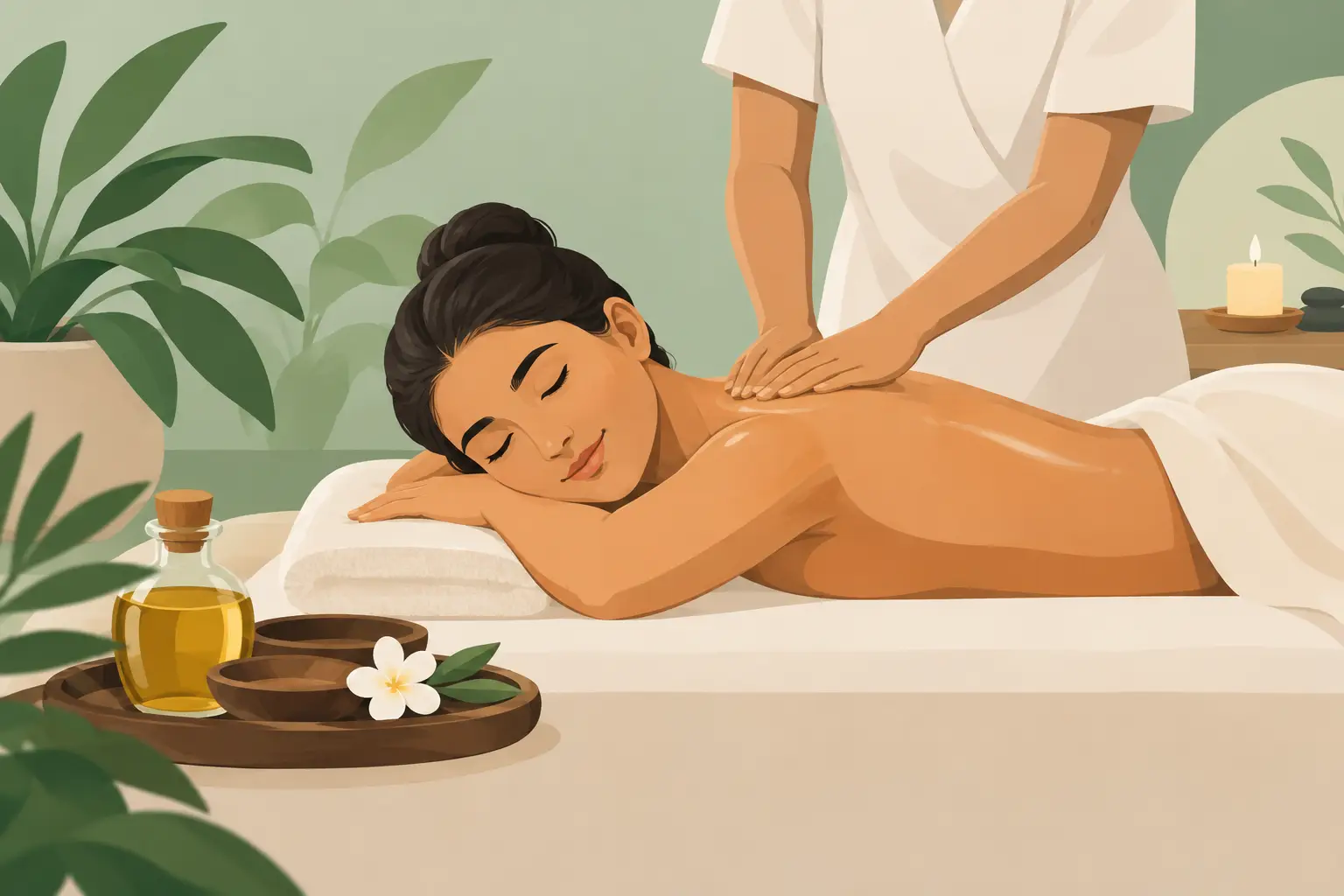
A packed travel day, hours in the sun, a wedding itinerary, or simply the pace of everyday life can leave the body tense long after you have reached paradise. The abhyanga massage benefits for stress begin with something beautifully simple: slowing down long enough for warm oil, intentional touch, and a quieter rhythm to take over.
Rooted in Ayurveda, Abhyanga is not a rushed massage with oil added at the end. It is a full-body ritual in which warm herbal oils are applied with flowing, purposeful strokes. The experience is deeply sensory, but its value reaches beyond the treatment room. For guests seeking a more grounded kind of luxury, it can create space to rest, reconnect with the body, and leave feeling cared for from head to toe.
Why Stress Settles Into the Body
Stress is not always felt as worry alone. It may show up as a tight jaw after a long flight, shoulders lifted toward the ears, restless sleep, low energy, or the sense that you are physically present but mentally still catching up. Even on a vacation designed for relaxation, the nervous system can remain in a state of alertness.
Massage offers a change in input. Instead of screens, schedules, noise, and constant decisions, the body receives steady, nurturing contact. Warm oil adds another layer of comfort, helping the treatment feel enveloping rather than purely corrective. This is where Abhyanga can be particularly meaningful: it invites softness without asking you to do anything at all.
Abhyanga Massage Benefits for Stress and Tension
Abhyanga is traditionally tailored through Ayurveda’s understanding of individual constitution and imbalance. In a modern spa setting, the ritual can be adapted to your comfort, tension level, and desired outcome. While one session is not a cure for chronic stress, it can be a powerful part of a more intentional approach to restoration.
It encourages the body to shift into rest
Slow, rhythmic massage strokes can help signal safety and calm to an overstimulated system. Many guests notice their breathing deepen as the treatment progresses. Thoughts may still arise, but they often lose their urgency when there is nowhere else to be.
This is one reason Abhyanga feels especially welcome after travel or during a full island itinerary. It creates a pause between doing and being, allowing the body to settle before dinner, sleep, or a day at the beach.
It eases the physical holding patterns of a busy life
Stress frequently collects in the neck, upper back, hips, hands, and feet. Abhyanga’s generous application of warm oil allows the therapist to work with smooth, continuous movements that can soothe areas of everyday tightness.
The pressure should be personalized. Some guests want a gentle, floating experience; others prefer focused attention through the shoulders and lower back. Communicating what feels good is part of the ritual. Relaxation is not one-size-fits-all, and deeper pressure is not automatically better for a stressed body.
Warm herbal oil creates a cocooning sensation
The temperature and texture of the oil are central to Abhyanga. Warm oil can feel immediately comforting on skin that has been exposed to air conditioning, salt water, sun, or the dry air of a plane cabin. It also leaves the body with a supple, nourished finish that a dry massage cannot replicate.
Depending on the ritual, oils may be chosen for their aroma and skin-loving qualities. The goal is not to overwhelm the senses with fragrance, but to create a grounded, tranquil atmosphere that supports the experience of letting go.
It turns skin care into a form of self-regard
Stress can make self-care feel optional. An oil massage makes the body itself worthy of attention again. As the skin is nourished and circulation is stimulated through massage, many guests leave with a noticeable softness and glow.
That visible result matters, particularly before a celebration, romantic evening, or special event. Yet the more lasting benefit may be the feeling of inhabiting your body with greater kindness. Give your body a little love, it deserves it.
It may support a more restful evening
An Abhyanga treatment is often a lovely choice later in the day, when the goal is to ease toward a slower evening. The quiet environment, reduced muscular tension, and lingering warmth can make it easier to preserve the relaxed mood you came to the islands for.
Results vary. If you are carrying significant stress, one massage may bring immediate relief without changing the habits that keep tension returning. Regular restorative care, hydration, gentle movement, adequate sleep, and protected downtime all work together more effectively than any single treatment.
What an Abhyanga Ritual Feels Like
A thoughtfully delivered Abhyanga session begins with a brief conversation about your comfort, areas of tension, health considerations, and what you would most like to feel afterward. For some, that is deep relaxation. For others, it is lighter legs after a flight, softer skin after sun exposure, or a sense of connection before a couples experience.
The therapist then applies warmed oil using long, flowing strokes across the body, with measured attention to areas that need care. Unlike a sports massage, the feeling is usually more continuous and rhythmic than highly targeted. The pace is unhurried by design.
At Ayur Spa, an Abhyanga-inspired ritual can feel especially fitting in the privacy of a villa or amid the calm of a beachside setting. The sound of the water, the warm Caribbean air, and expert hands can turn an appointment into a memorable part of your stay. For couples, sharing the experience can offer a rare moment to truly slow down together.
How to Make the Benefits Last Beyond the Massage Table
You do not need to plan an entire wellness retreat around your treatment, though leaving room afterward helps. Avoid scheduling a demanding workout, a tightly timed excursion, or a long stretch of work calls immediately after your massage if you can. A relaxed shower later, a nourishing meal, and an early night allow the sense of ease to continue.
Drink water because it is a simple way to care for yourself, not because massage somehow “flushes toxins” from the body. If oil remains on the skin, let it absorb for a while before showering, provided it feels comfortable. Wear loose clothing, and take a few quiet minutes before returning to the pace of the day.
For an at-home version, warm a small amount of body oil between your palms and use slow strokes on the arms, legs, feet, and shoulders. This will not replace the skill or calm of a professional treatment, but it can become a gentle evening cue that the day is ending.
When to Choose Another Treatment or Check First
Abhyanga is a comforting choice for many people, but it is not appropriate in every circumstance. Tell your therapist about pregnancy, recent surgery, acute injury, fever, unexplained swelling, skin irritation, allergies, blood-clot concerns, or any medical condition that could affect massage safety. A skilled spa professional can modify the experience or recommend postponing it when needed.
If you prefer no oil, want very focused work on a particular knot, or are looking for firmer therapeutic pressure, another massage style may better suit your goals. The best treatment is the one that meets your body where it is, rather than following a trend or expectation.
Stress asks for attention in small, persistent ways. Let your answer be equally intentional: an hour without demands, warm oil on tired skin, slower breathing, and the quiet permission to rest. In a place as beautiful as Turks and Caicos, that pause can become part of the memory you take home.